Guide
·11 min read
What to Expect from Your First Ayahuasca Ceremony — An Honest Walk-Through
Hour by hour, what actually happens during a traditional Ayahuasca ceremony in the Ecuadorian highlands — from the afternoon arrival through dawn, including the parts most websites don't tell you about.
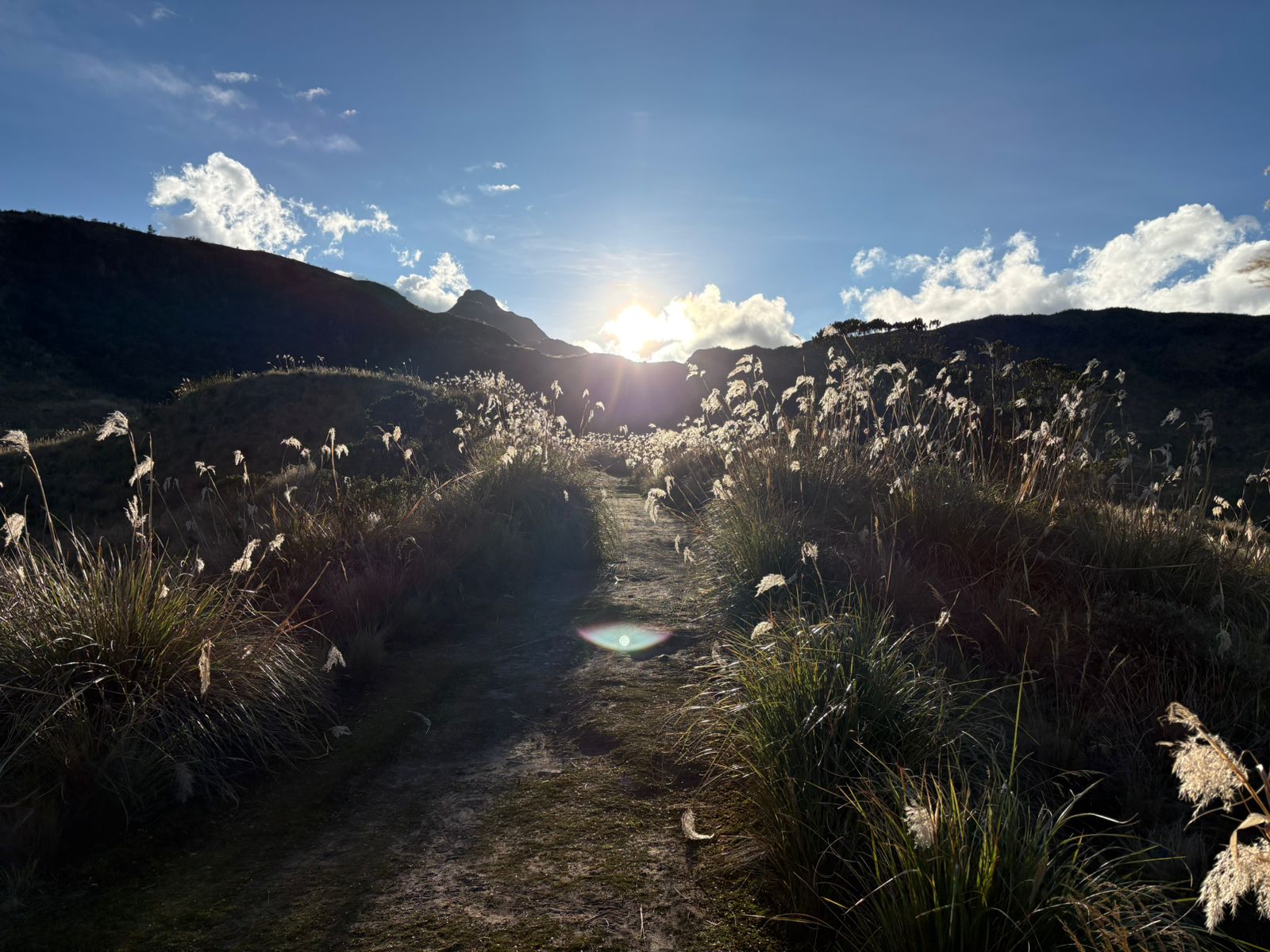
If you've read about Ayahuasca on the internet, you've probably encountered two flavors: rapturous spiritual transformation, or terror-tinged horror story. Real ceremony is almost never either. Here is what an honest first night with our circle actually looks like — including the boring parts, the awkward parts, and the parts that quietly change your life.
The afternoon — settling the body
Ceremony night begins long before sunset. By 2 pm you've already been on a light diet for a week and on the retreat for two days. You skip lunch — Ayahuasca is taken on a near-empty stomach. The afternoon is quiet: hammock time, optional bodywork, the last walk through the gardens, a short check-in with John or Gabriel about anything sitting in your chest.
By 5 pm the maloka is being prepared. The Taita arrives with the medicine in a glass bottle, dark as wine. The fire is lit. Mats and blankets are laid in a circle, each with a personal bucket — yours — for purging. There are usually 8 to 12 of us. You will know roughly half the names already.
Sunset to medicine — the opening
We sit in the maloka in silence as the sun goes down. The Taita opens the space with prayer in his own language, with mapacho smoke (sacred tobacco), and with agua de florida poured into his palms and rubbed gently on the head and chest of each person in the circle. The fire is fed. A few minutes of breath. And then he calls each of us up, one by one, to receive the cup.
The medicine tastes — there is no easy way to say this — strongly. Earthy, bitter, slightly sweet, slightly fermented. About 60–80 ml. You drink it in two or three swallows, return to your mat, and the room is quiet again. The candles are blown out, leaving only the small fire in the center.
The first 20 minutes: nothing
You will be very aware that you have just drunk something. You will be very aware that nothing is happening. This is normal. The medicine takes 20–45 minutes to come on. Use this time to settle your body — find your favorite position, drink water, breathe slowly, set or remember your intention. Anxiety in this window is the most common rookie experience. Don't fight it. Just lie down.
The medicine arrives
First-time signs that the medicine is working: a slight ringing in the ears, a feeling of weight or warmth in the body, a strange clarity in the dark — outlines start to feel sharper. Then, with eyes closed, the visual layer opens. Geometric patterns. Soft colors. Curtains of light. For some people this layer is the whole experience. For others it deepens into specific imagery — landscapes, beings, scenes from your own life shown back to you, your grandmother's kitchen, a memory you'd forgotten existed.
The Taita begins to sing. Icaros — traditional medicine songs — are not entertainment. They steer the medicine. They turn the wave. When you can't find your way, you follow the song.
The purge
Some time in the first 90 minutes, your body will likely purge. Vomit, sometimes diarrhea, occasionally yawning or trembling or weeping. This is the medicine cleaning out what it has come to clean. In our tradition the purge is not failure — it is the point. People who do not purge often request more medicine. People who do purge often describe the experience afterward as ‘something I needed to get rid of, that I didn't know was inside me.'
Hours 2 to 4 — the deep part
This is the heart of the ceremony. The medicine works on something specific — almost never what you came to it for. Common content people share with us in the morning circle: confronting their relationship with their father; meeting a deceased grandparent; receiving very specific instructions about a current life decision; experiencing the body of a child they were once; weeping for hours about something seemingly small. Visions are not the point — the point is what the visions are showing you about how you actually feel.
Some moments feel sublime. Some feel terrifying. Most feel utterly ordinary in a way that makes them harder to dismiss. The fear, when it comes, is usually fear of finally feeling something you've been avoiding. The instructions that come are usually not new — just impossible to ignore now.
The second cup — optional
Around midnight the Taita opens a second cup. About a third of our participants take a smaller dose. Two thirds let the first dose carry them. Either is fine. There is no extra credit.
Hours 4 to 6 — the cooling
The medicine slowly fades. The geometry softens. You can think clearly again, but you are very tired and very tender. People often sit up around 1 or 2 am, drink water, sometimes eat a small piece of fruit. You may want to talk to a facilitator — that is what they are there for. Or you may just want to lie under your blanket and watch the embers.
Dawn — the close
The Taita closes the space at first light. Tobacco smoke, water, song. We sit together in silence, then in slow conversation. Breakfast is light: papaya, oatmeal, ginger tea. People look different in the morning — not radiant, not transformed, just clearer. Like a window that someone wiped.
What to bring with you into the ceremony
- A clear, simple intention — not a list, not a goal, just one true thing you want to look at
- Trust in the people around you (this is partly why we screen everyone first)
- Loose, warm clothes — the body's temperature regulation often goes off
- Eye mask or cloth, water bottle, lip balm, an extra pair of socks
- Your own bucket — yes, this is provided. Yes, you will use it.
What not to bring
- A camera or phone (left outside the maloka)
- Expectations of a specific outcome
- Caffeine, sugar, or recent recreational drugs
- The need to look composed — you will not, and that's the point
◦ first ceremony rarely gives you what you came for ◦ it gives you what you needed ◦
The day after
The morning after, most people feel raw and quiet. We hold a sharing circle around 10 am. You will hear what other people experienced and the strange feeling of recognizing your own night in their words. The day is unstructured: rest, hammock time, a slow walk, the river. By dinnertime you will be hungry, very hungry, and the food will taste like something you've never tasted before.
If you have specific questions about whether you are ready for ceremony, or about the screening process, write to us. We answer every email personally — usually within a day or two.
◦
Ready to talk?
If something here resonates, write to us. We'd rather have the long conversation now than after.
Contact usContinue reading
Guide
San Pedro vs Ayahuasca — Which Plant Medicine Is Right for You?
Both are sacred. Both are powerful. They do very different work. A comparison from a circle that holds both — covering tradition, day-of experience, intensity, and who tends to be drawn to which.
Read articleGuide
When Is the Best Time of Year for an Ayahuasca Retreat in Ecuador?
Ecuador sits on the equator — there are no four seasons, just two. A month-by-month guide to weather, ceremony rhythm, what to pack, and what each window asks of you.
Read article